Free Printable Grade 2 Math Worksheets
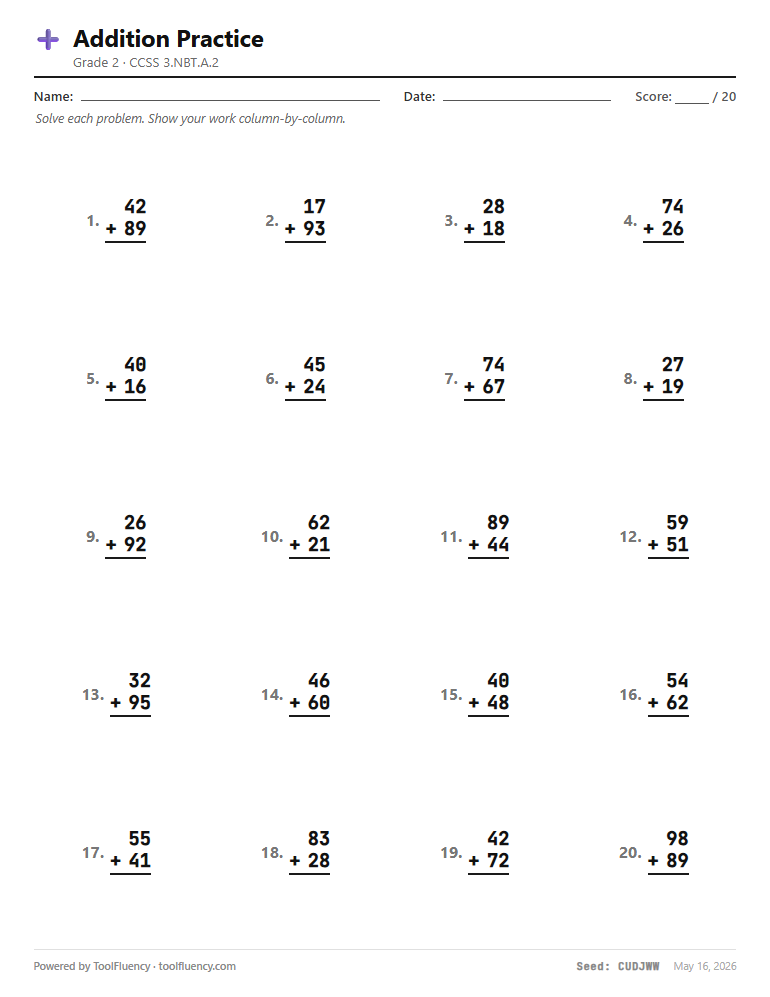
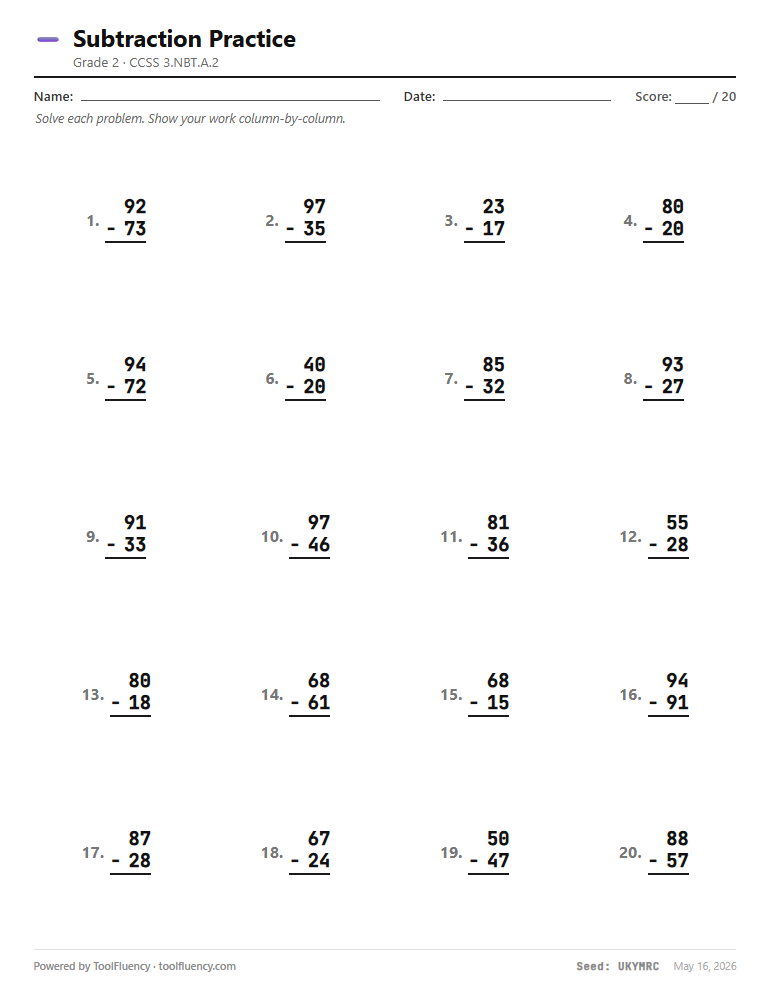
Every 2nd-grade math skill in one place — addition and subtraction within 100 and 1000, place value, skip counting, comparing numbers, telling time, money, and word problems. All free generators, all with answer keys, all aligned to Common Core State Standards.
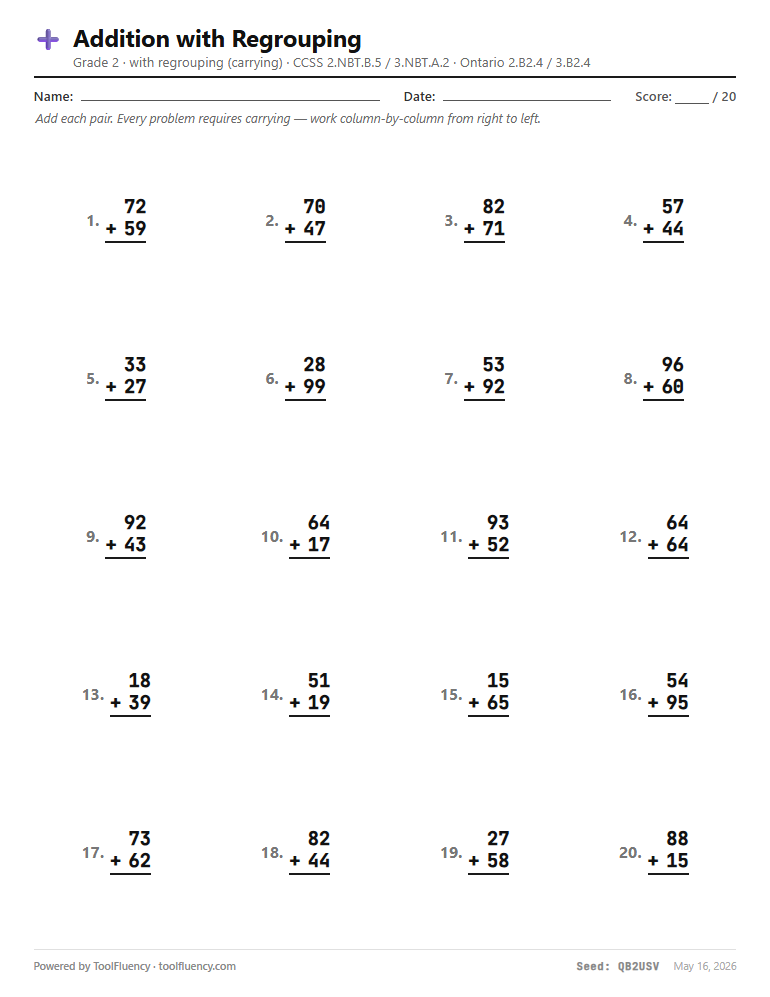
Grade 2 is the year arithmetic gets real. Students move from the small numbers of Grade 1 to fluent addition and subtraction within 100 (CCSS 2.OA.B.2, 2.NBT.B.5) and begin adding and subtracting within 1000 (2.NBT.B.7) — including the big conceptual leap of regrouping (carrying and borrowing). Alongside that, they build deep place-value understanding to 1000, learn to tell time to the nearest five minutes, count money, and meet the first foundations of multiplication through arrays and even/odd numbers. This page collects every ToolFluency generator that targets a Grade 2 skill, grouped by the four Common Core domains.
Every tool here is a generator, not a static PDF — infinite fresh problem sets, a seeded code that reproduces any exact worksheet, a single-page print guarantee, and a one-click answer key. You control digit count, regrouping, problem count, and layout, so the same tool grows with the student through the year. No signup, no email gate, no watermark — the clean alternative to the dated free worksheet sites.
The research-backed pattern is 10–20 minutes of daily practice rather than one long weekly session (Foorman 2016 IES practice guide). Lead with strategies — make-ten and doubles for addition, think-addition for subtraction — and anchor regrouping in place value so it rests on real number sense. Pair daily computation with a word problem or two so the skills transfer to real contexts.
Every Grade 2 math skill
Grouped by the four Common Core Grade 2 domains. Twelve generators covering the full 2nd-grade scope.
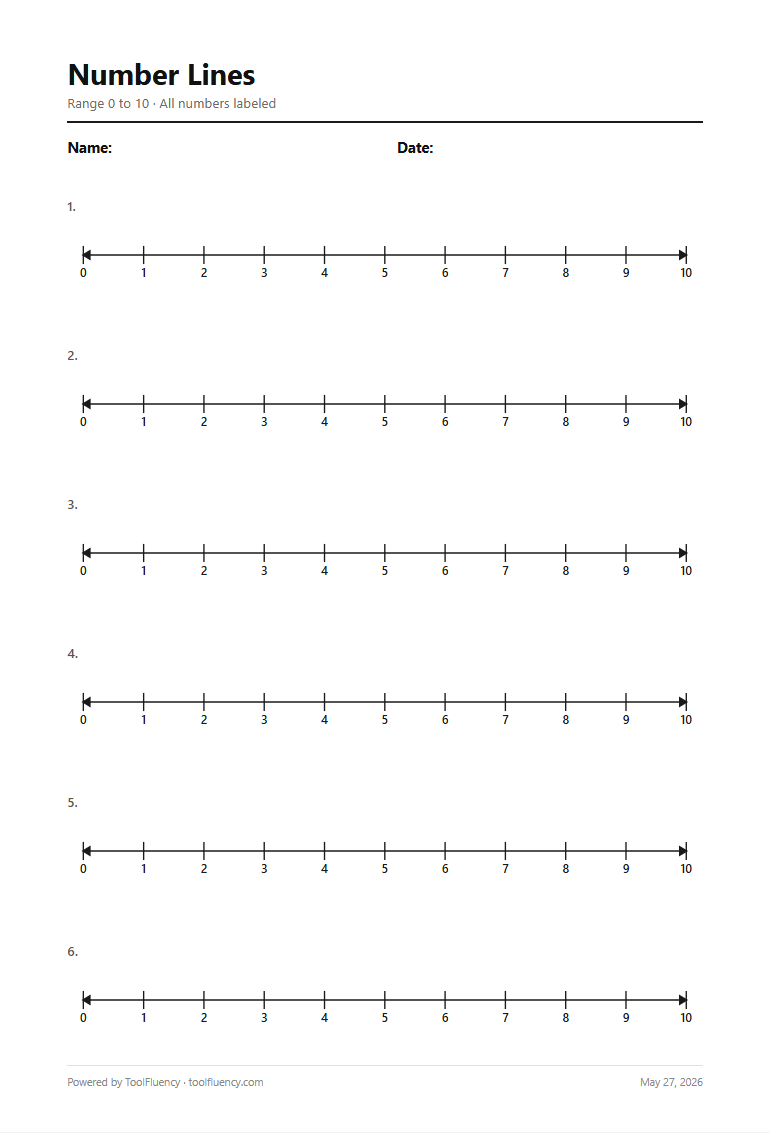
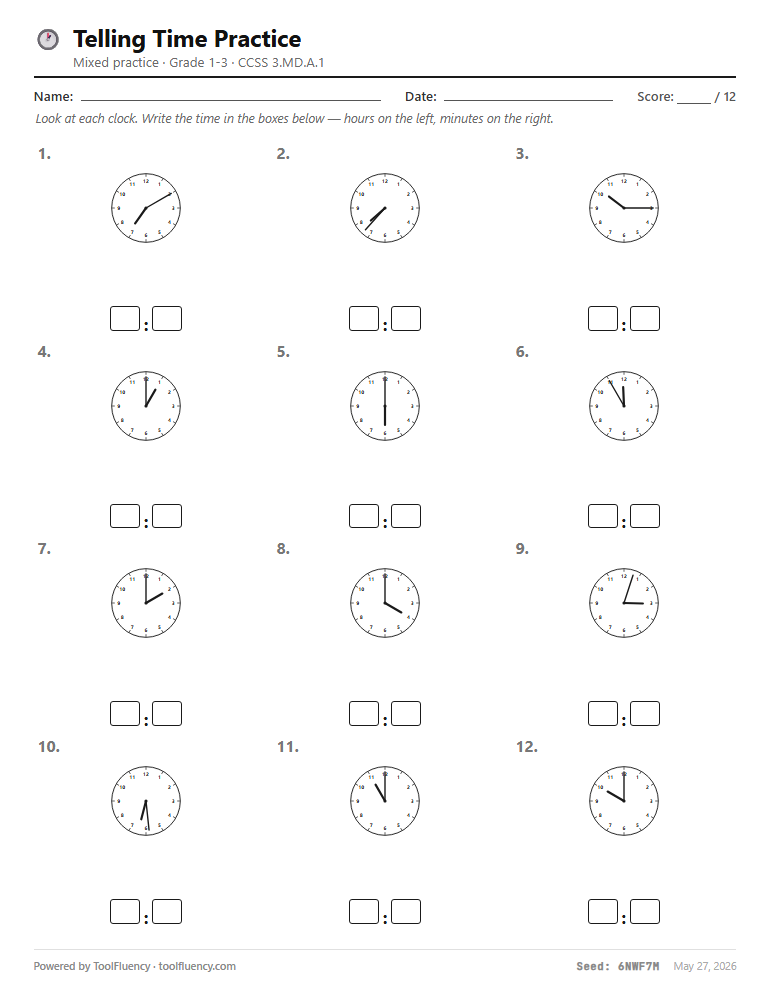
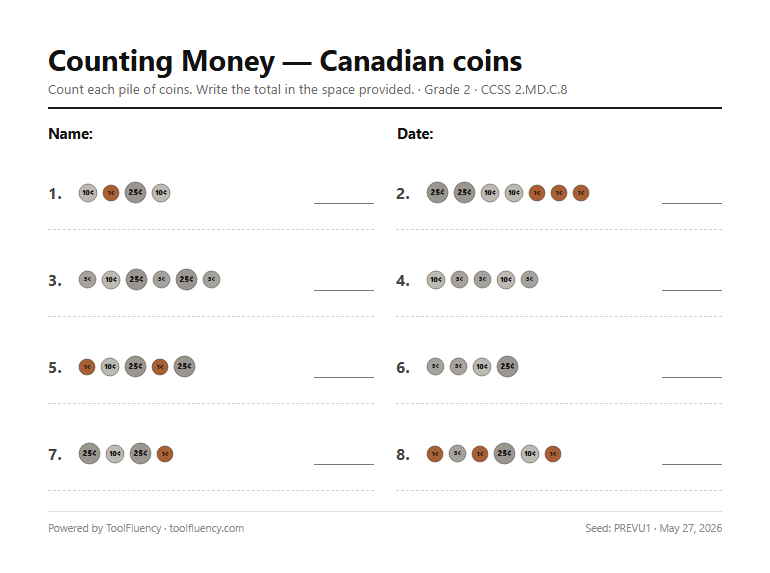
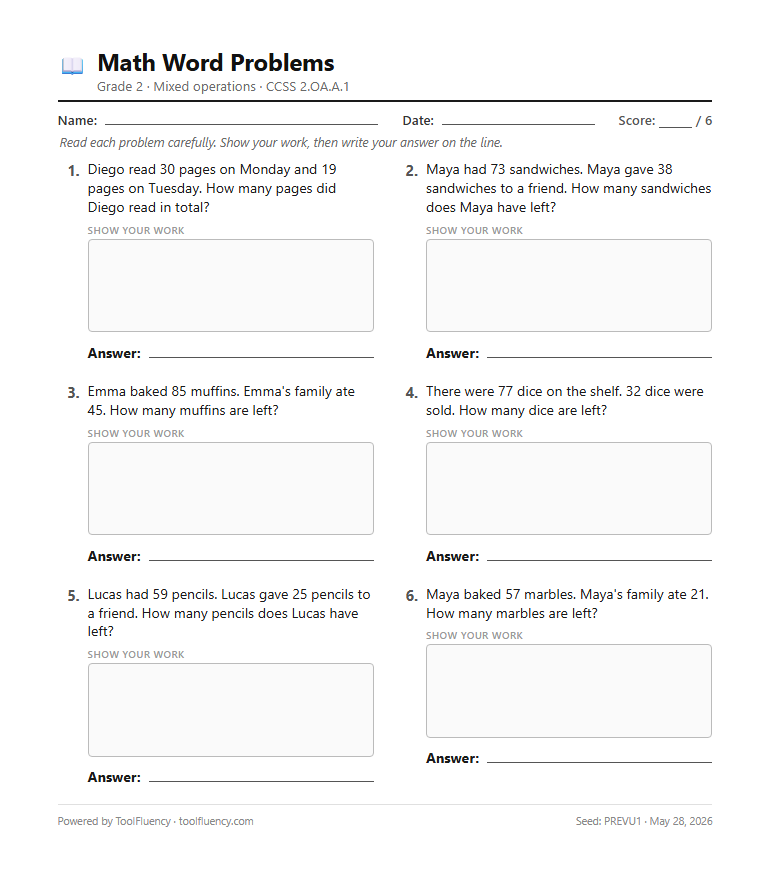
What Grade 2 students should know
Common Core Math Grade 2 spans four domains. Here's the end-of-year picture and which tools build each skill.
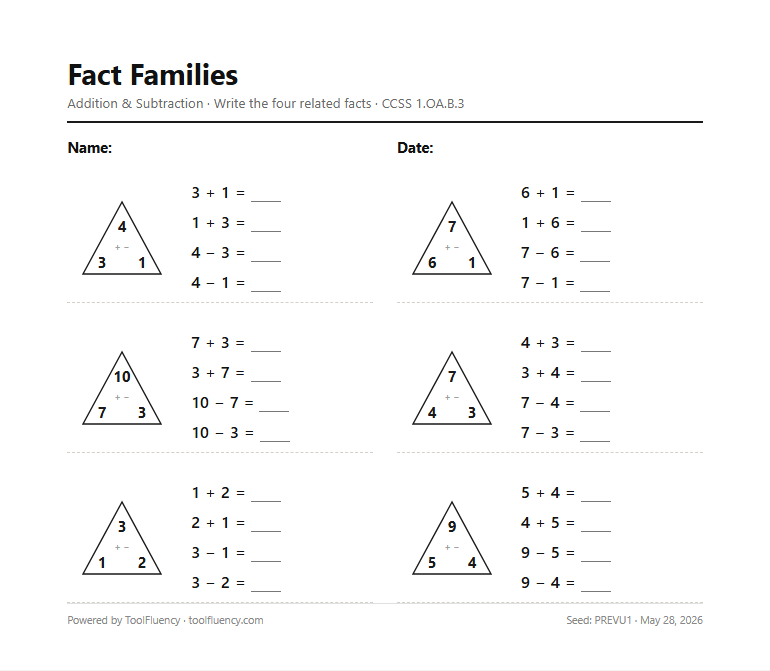
- Operations & Algebraic Thinking (2.OA). Fluently add and subtract within 20 from memory; solve one- and two-step word problems within 100; work with equal groups and arrays (even/odd, repeated addition) as the first taste of multiplication.
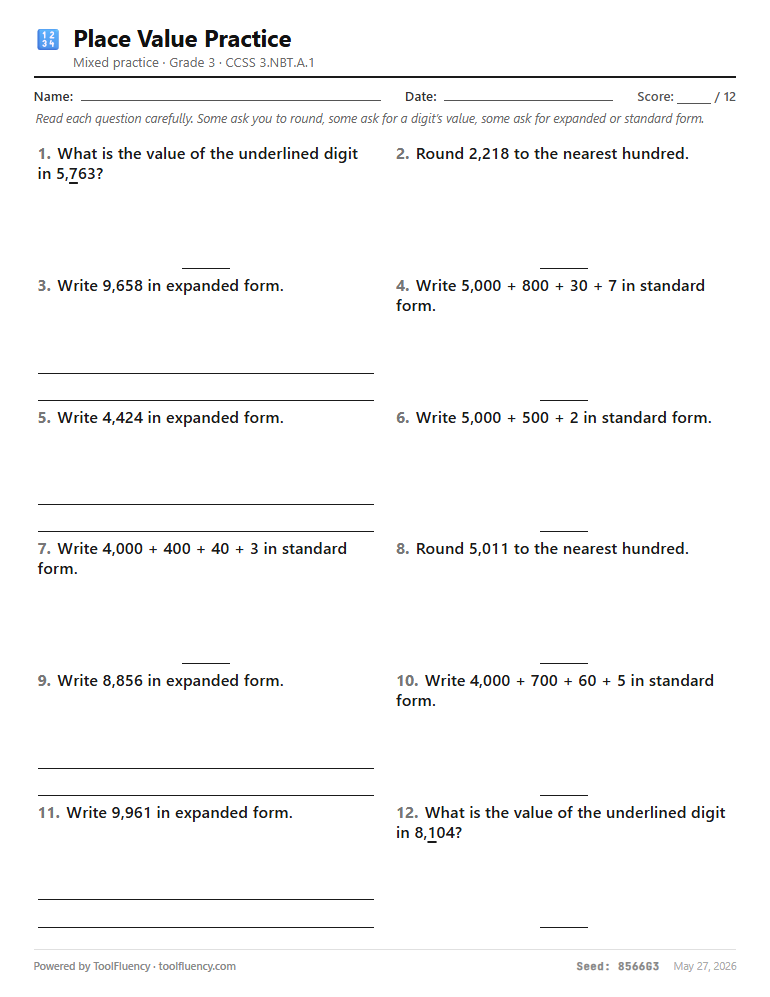
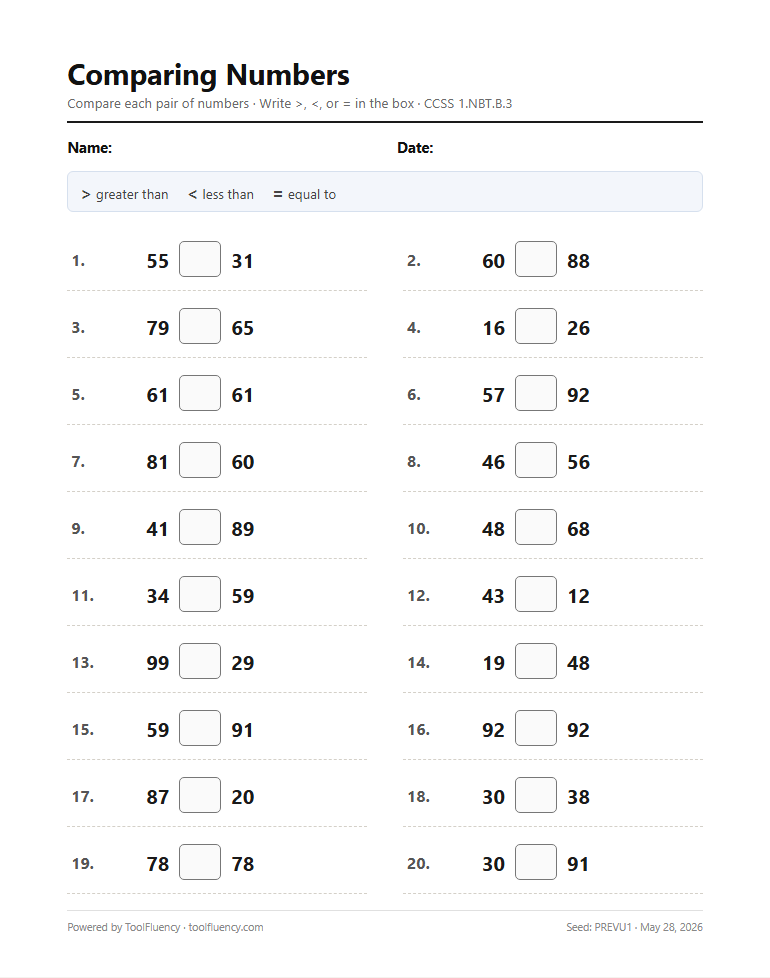
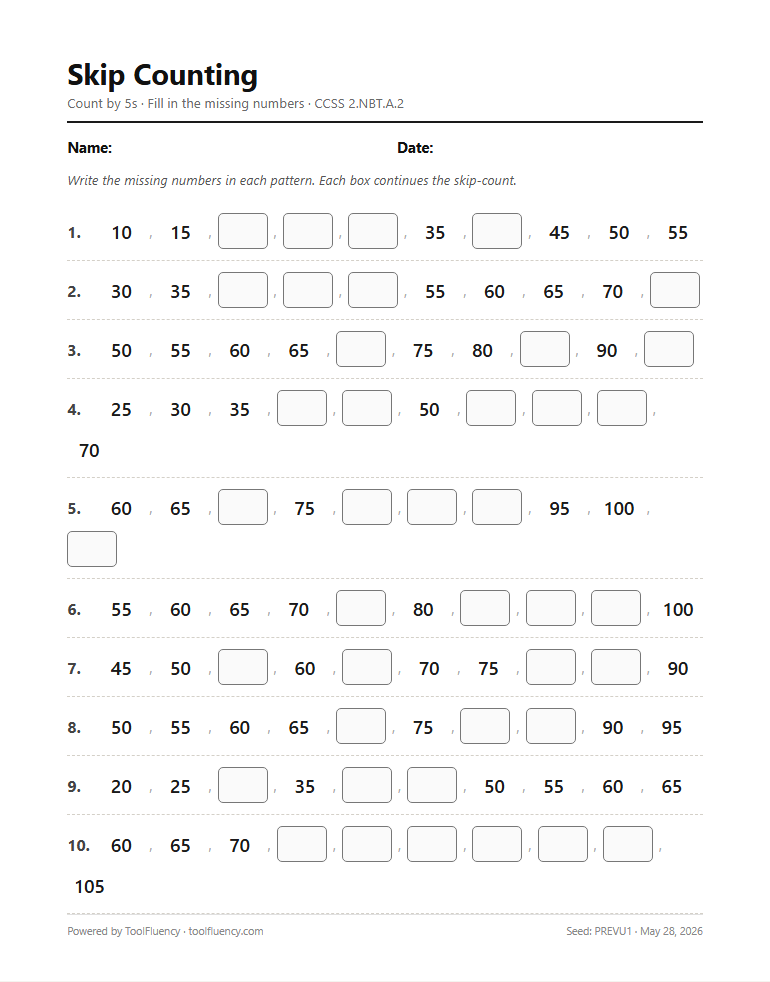
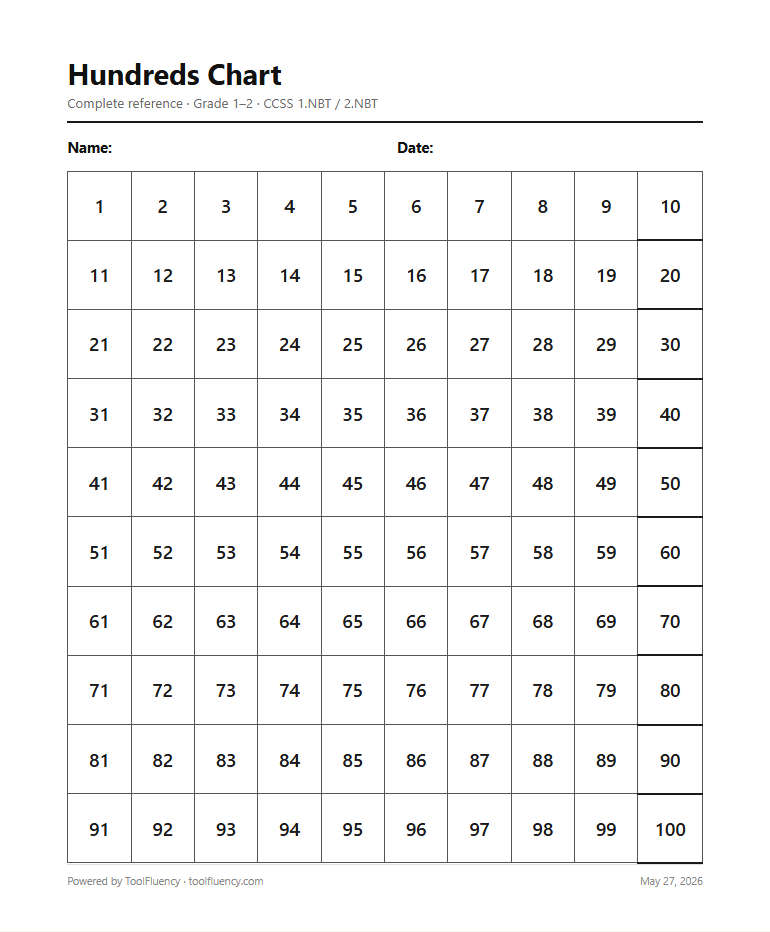
- Number & Operations in Base Ten (2.NBT). Understand place value to 1000; skip-count by 5s, 10s, and 100s; read/write numbers in standard, expanded, and word form; compare three-digit numbers; and fluently add and subtract within 100 (then within 1000) using regrouping. This is the biggest Grade 2 domain.
- Measurement & Data (2.MD). Measure length in standard units; tell time to the nearest five minutes (AM/PM); solve money problems with dollars and cents; and build picture and bar graphs.
- Geometry (2.G). Recognize and draw shapes by attributes; partition rectangles into rows and columns of squares (an array foundation); and partition shapes into halves, thirds, and fourths.
Common questions about Grade 2 math
What parents and teachers ask first.